
Montgomery County Resident Lookup Records
A resident lookup in Montgomery County reaches different custodians, not one master register. Start with the kind of connection that needs checking, then select the custodian that actually creates the record. A property card can identify an appraisal account and parcel. A recorded deed can identify a transaction party. A court file can identify a party to a case. An election status is an administrative registration clue. Each record has its own date, scope, and access channel.
| Record | What it confirms | Where | Access |
|---|---|---|---|
| MCAD appraisal account | Parcel, situs, owner field, legal description, deed-history key | Montgomery Central Appraisal District | Public property search or office contact |
| Official instrument | Grantor, grantee, document, recording date, and record key | Montgomery County Clerk | Public index, counter, or mailed copy request |
| Registration-status route | Election registration status or street lookup path | Montgomery County Elections | Online form, phone, in person, or file request |
| County or district case | Case routing, parties, filings, or disposition where public | County Clerk or District Clerk | Odyssey module, secure route, counter, or written request |
| Vital event index or copy | A likely birth, death, marriage, or divorce event | DSHS and local clerks | State verification, qualified-copy route, mail, or phone |
| Historic publication | Public name or address association at a stated time | MCMLS, TSLAC, and archives | Library, digitized collection, microfilm, or catalog |
For a current owner question, MCAD is usually the first check. For a recorded transaction, move to the County Clerk. For a historical name, use the library and archival trail rather than expecting a current portal to contain every older record. That separation helps a Montgomery County resident lookup remain traceable.
Define a Montgomery County Record Role
Before entering a name, decide whether the person should appear as an owner, grantor, grantee, voter, case party, heir, licensee, business filer, or historical resident. These roles are not interchangeable. An appraisal owner can be an estate, trust, or entity. A mailing address can be outside the county. A grantor or grantee identifies a party to a recorded interest, while a printed directory line reflects an association at its publication time.
Capture the non-sensitive anchors that distinguish names: spelling variants, middle initial, approximate year, street or city, subdivision, record date, court or agency, and stable key. Useful keys include a Property ID, Geographic ID, instrument number, book and page, cause number, or license number. Keep the source date beside the event date. A portal can show current access to an older event.
Note: A name-only match is a lead for comparison, not proof that every record belongs to the same Montgomery County resident.
Anchor a Montgomery County Name
When an address is known, search Montgomery Central Appraisal District by owner or address and capture the property key before opening other systems. MCAD’s observed search labels include Owner Search, Address Search, Property ID Search, Legal Description Search, Map Search, and an appraisal-year selector. A current card can display status, Property ID, Geographic ID, Tax Office ID, legal description, owner, mailing address, situs, values, exemptions, and deed-history rows.
Then use the County Clerk Official Records Search for the instrument shown by the card. The portal accepts a general search term and recorded-date range, with index-only or index-and-OCR scope. Its Search Term can reach grantor, grantee, subdivision, document type, or document number. An exact instrument, legal description, and date window offer a stronger starting point than a broad surname query.
| Field to retain | Why it matters |
|---|---|
| Property or Geographic ID | It ties the appraisal account to the specific parcel. |
| Situs and mailing fields | They are distinct address types and should not be merged. |
| Legal description | It joins a lot, block, subdivision, or tract to recorded documents. |
| Instrument, book, or page | It points to the recorded transaction instead of only a name. |
| Record role and date | They show whether a name was an owner, party, or other indexed role at a particular time. |
Read Montgomery County Voter Status
The County Elections route is useful for checking registration status without turning it into an occupancy claim. The public street form accepts House Number, Street Name, and ZIP Code, while the public-information portal is account-gated. Inspected status explanations include Registered, Suspense, Pending Approval, Awaiting Voter Response, and Ineligible for Party Election. Suspense means the registrar lacks a current address under the cited election rule; it is not a finding that the person is absent from the county.
The successful Montgomery County voter-status result capture shows the terms used by the official route.
For a file request or status help, contact the Elections Administrator at 9159 Airport Road, Conroe, or by the listed 936-539-7843 line. Ask for the current procedure, exact available fields, fees, and redactions. The registrar’s data can include suppressed addresses, and ballot choices are not public.
Search Montgomery County Court Routes
Court searches should follow the court level. The County Clerk Odyssey landing page exposes a location selector, Criminal Records, Civil & Probate Case Records, and Court Calendar. The District Clerk endpoint is secured and did not expose anonymous text-name fields in the inspection. District courts hold district filings, while the County Clerk handles county-court-at-law, misdemeanor, probate, and related records. Justice courts and municipal courts have their own precinct or city routes.
When the online module is gated or a cause number is unknown, use the custodian. The District Clerk lists 301 N. Main St., Suite 103, Conroe, 936-539-7855, and recordsrequest@mctx.org. Its inspected copy form allows a request by cause number, court, style, document, and certified choice. If no cause number is known, it asks for a filing date or type and states a $5 research fee, $1 per page, $5 per certified document, and up to three business days. The County Clerk counter and copy path provide a separate route for its records.
A docket is the court’s running list of events in a case. A visible landing-page module is not a case result, and a name hit needs a case number, role, court, date, and disposition before it can be compared with other records.
Use Montgomery County Vital Indexes
Texas DSHS provides state birth and death certificates or verifications, plus marriage and divorce verification letters. The state marriage index begins in 1966 and the divorce index in 1968. Montgomery County Clerk records are the controlling source for a certified marriage license issued there, while the District Clerk is the controlling source for a certified divorce decree. A state verification letter is not the local original.
Texas Government Code §552.115 makes birth records public after 75 years and death records public after 25 years, with the stated rule for unidentified deaths. Recent certified copies have qualified-applicant and identification rules. The inspected DSHS fees include $22 for a birth certified copy or verification, $20 for a first death copy or verification, $3 for an additional death copy in the same order, and $20 for marriage or divorce verification. Use DSHS forms, mail, or 888-963-7111 for state routing; use the local clerk for the controlling local record.
Resolve Montgomery County No Matches
A no-match result does not prove that a person was never in Montgomery County. An MCAD search can fail because of an address format, entity ownership, parcel split, wrong appraisal year, or a location outside MCAD’s service. A voter route can fail because of nonregistration, protected status, a stale street form, a different county, or a limited web function. A court search can fail because the case belongs in another court, is sealed, uses a variant name, or is held behind a secure path.
Retry with a name variation, legal description, map search, date range, cause number, or the correct city or court. For a vital record, consider index coverage, a local original, spelling, date error, or restricted adoption or paternity information. For a historical resident, check a newspaper, city directory, tax roll, probate record, or microfilm guide. Keep the unsuccessful query in the research log so the next method is not merely the same search repeated.
Note: A missing web hit can reflect a redaction, coverage gap, or wrong record system instead of a negative fact about a person.
Verify a Montgomery County Resident
Verification works best when two independent record families agree on a stable point. For example, pair an appraisal account with a recorded instrument, a printed directory with a tax roll, or a docket with the custodian’s disposition. Save the person’s role and the record’s date, not only the displayed name. If certified proof is needed, request it from the official custodian rather than relying on an index display.
- Collect the full name, known variants, approximate period, and one non-sensitive anchor such as an address, city, or record number.
- Use MCAD or a documented address source to capture a parcel identifier, situs, legal description, and the separate mailing field.
- Confirm a related recorded instrument through the County Clerk by grantor, grantee, subdivision, date range, or instrument number.
- Check the correct court, election, vital, library, or state route only for the separate question it can answer.
- Request a certified copy, counter inspection, or written response from the custodian when an official copy is necessary.
- Docket
- The chronological case-event list maintained by a court.
- Index versus image
- An index lists searchable record references; an image is the underlying document when access is available.
- Certified copy
- A custodian-issued copy authenticated for official use, distinct from an informational index result.
Use Montgomery County Historical Trails
For a historical resident lookup, MCMLS Genealogy & Local History at the Central Library offers a human-assisted starting point. The partner page lists 104 I-45 North, Conroe, 936-522-2138, and LibraryGenealogy@mctx.org. Its collections include maps, records, books, and rare or out-of-print materials. The Portal to Texas History has digitized Conroe Courier material, photographs, and a yearbook, but OCR needs manual checking against the page image.
The Texas State Library guide adds older Montgomery channels: deed records from 1838 through 1887, marriage records from 1838 through 1916, probate minutes from 1838 through 1906, and tax rolls from 1838 through 1910. Microfilm, library assistance, the FamilySearch catalog, and a clerk inquiry are often better choices than forcing an older name through a modern search field. A historic address trail can also be expanded through the Montgomery County city directories.
Montgomery County Resident Lookup Limits
Texas public-record access has firm boundaries. Do not collect or disclose Social Security numbers, Texas driver-license or DPS identifiers, protected voter addresses, victim or juvenile information, full vital applications, medical or mental-health details, sealed material, expunged matters, or login-only data. The Attorney General Address Confidentiality Program uses a substitute mailing address for qualifying participants, and a voter record marked with suppressed information should remain suppressed.
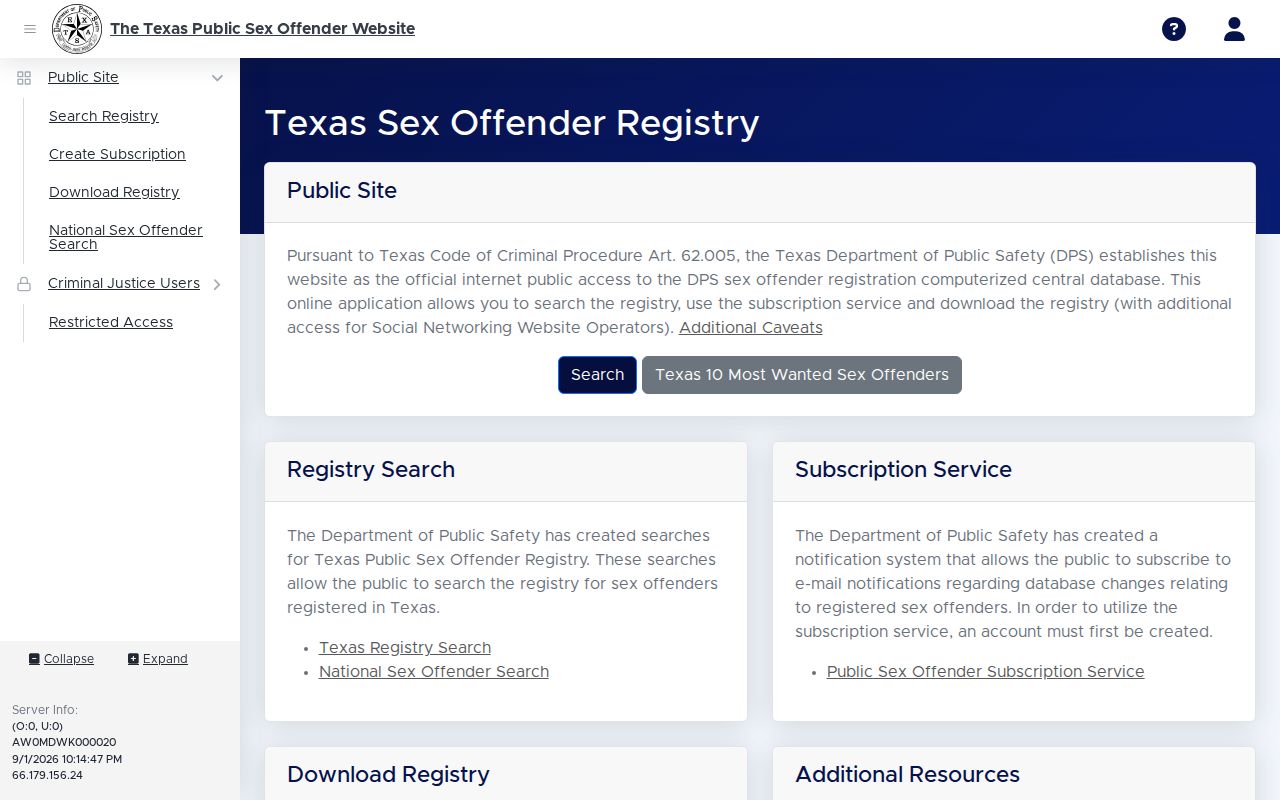
The Texas DPS public registry is an official, limited safety record rather than an identity shortcut. Its public search modes include name, address, ZIP, county, and map, while excluded fields include SSN, driver-license data, phone, online identifiers, and victim information.
Use a name, date, location, and official identifiers to avoid a mistaken match, and verify a court disposition with the proper clerk. A written Texas Public Information Act request should seek an existing, specific record and is subject to lawful redaction.
Lawful use. Use a Montgomery County resident lookup for a personal, lawful purpose. Never use public records to stalk, harass, impersonate, intimidate, or expose protected details.